A self-transfer is a connection between two separate tickets. You usually have to collect your bags, pass immigration, check in again and go through security, so you often need a visa for the connecting country even on a short layover. Allow at least 3–4 hours, and buy insurance or a protection guarantee, because the second airline will not rebook you if the first flight is late.
Booking sites love “virtual interlining”: combining flights from airlines that don’t work together into one cheap itinerary. You save money, but you take on all the risk of the connection. Here’s what that really means.
What is a self-transfer?
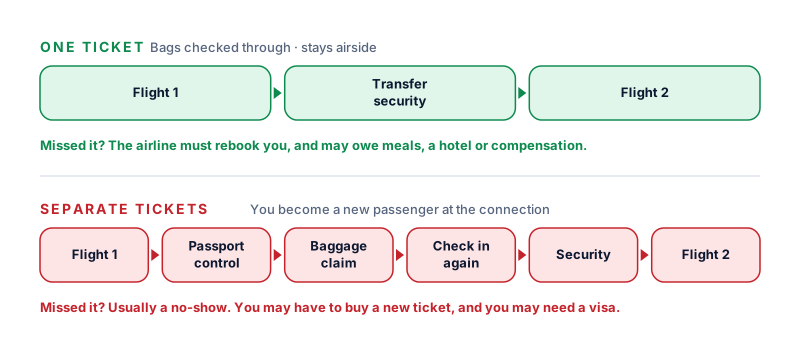
A self-transfer happens when your journey uses two or more separate tickets. Each airline only knows about its own flight. That means:
- ❌ Your bags aren’t checked through. You collect and re-check them.
- ❌ You may need to pass immigration, which needs a visa if your passport requires one.
- ❌ If the first flight is late, the second airline won’t wait or rebook you.
- ❌ You go through security again.
The visa trap
This is the biggest hidden risk. On a normal one-ticket connection, you’d stay airside and often need no visa. On a self-transfer with checked bags, you must enter the country to collect them.
Example: a traveller flying Delhi → London (airline A) → New York (airline B) on separate tickets, with a checked bag, must clear UK border control at Heathrow. That needs UK entry permission, not just a transit visa.
👉 Check the rules for your passport with our transit visa checker.
How long should a self-transfer be?
| Situation | Minimum we’d book |
|---|---|
| Hand luggage only, same airport, airside transfer possible | 2–3 hours |
| Checked bags, same airport | 3–4 hours |
| Long-haul first flight (delay-prone) | 4–5 hours |
| Different airports in the same city | 5+ hours or overnight |
8 rules for safe self-transfers
- Travel hand-luggage only when you can.
- Check visa requirements for entering the connecting country, not just transiting.
- Leave a big buffer, especially after long-haul flights.
- Avoid the last flight of the day for your second leg.
- Use the same airport. Changing airports multiplies the risk.
- Buy insurance that covers missed connections on separate tickets.
- Consider a protection guarantee from the booking site, but read the terms.
- Check in online for the second flight if possible.
When a self-transfer is worth it
- The saving is large (often hundreds of dollars on long-haul routes).
- You have flexible plans and could buy a new ticket if things go wrong.
- You’re making it a stopover: spending a night or two in the connecting city on purpose.
When to avoid it
- You’d need a visa you don’t have for the connecting country.
- You’re travelling with children, lots of luggage, or on an important date (wedding, cruise departure, exam).
- The gap is under 3 hours.
Related: What happens if you miss a connecting flight · How long should a layover be?
Frequently asked questions
Do I need a visa for a self-transfer?
Often yes. If you must collect checked bags or check in again, you have to pass immigration and enter the country, which requires entry permission. With hand luggage only and an airside transfer desk, you may be able to stay airside, but check the airport’s rules.
Can I self-transfer with hand luggage only?
Yes, and it is much easier. Some airports have airside transfer desks where you can get your next boarding pass without passing immigration. If you already have both boarding passes, you may be able to go straight to the next gate.
What is self-transfer protection?
Some booking sites and airports sell a guarantee that rebooks you or refunds you if a delay on the first flight causes you to miss the second. Terms vary a lot, so read what is covered.