Airside means staying inside the international transit area without passing passport control; landside means clearing immigration and entering the country. Most travellers don't need a visa for airside transit, but landside always requires entry permission, and some nationalities need an airport transit visa even to stay airside.
Whenever you change planes in another country, one question decides whether you need a visa: will you stay airside, or go landside?
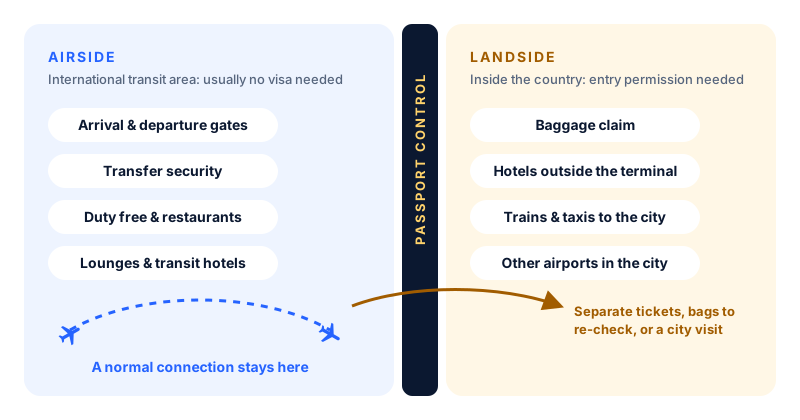
Airside: staying in the transit area
Airside is everything on the “inside” of passport control: gates, transfer security, duty-free, transit hotels and lounges in the international area.
If you stay airside for your whole connection, you never formally enter the country. That’s why most travellers don’t need a visa for an airside transit.
But not everyone. Some countries require an airport transit visa even for airside connections, for certain nationalities. Examples include the UK’s Direct Airside Transit Visa and Schengen countries’ Airport Transit Visa (ATV). Check the rule for your passport on our transit visa checker.
Landside: passing through immigration
Landside means you clear passport control and enter the country. That always requires entry permission, such as a visa, visa waiver, e-visa or visa on arrival, depending on your nationality.
5 situations that force you landside
Many travellers plan to stay airside and then find they can’t. Watch out for these:
- Separate tickets. If your flights are on different bookings, your bags often won’t be checked through. You’ll need to enter the country, collect them and check in again.
- Changing airports. London Heathrow → Gatwick, or Istanbul IST → SAW, always means entering the country.
- Overnight connections with no airside hotel. Some airports (like London Heathrow) only have hotels outside immigration.
- Domestic onward flights. Connecting from an international to a domestic flight means you clear immigration at the first airport.
- Entering a passport-free zone. Flying from outside Europe to one Schengen country, then onward to another, means you enter Schengen at your first stop.
Quick checklist before booking a connection
- Is it on one ticket, with bags checked through to your final destination?
- Does your passport need an airport transit visa for that country?
- Is the connection in the same airport?
- If it’s overnight, is there an airside hotel?
- Do you have a valid visa that gives you an exemption (for example a US, UK or Schengen visa)?
If you answer “no” or “not sure” to any of these, check the rules before you pay for the ticket.
Rules change often. Always confirm with the official government source or your airline before you travel.
Frequently asked questions
Do I need a visa if I stay airside?
Usually not. Most countries allow airside transit without a visa if you have a confirmed onward flight. Exceptions include airport transit visa requirements for certain nationalities in the UK and Schengen countries.
Do I have to go landside to collect my bags?
Only if your bags are not checked through to your final destination, which is common with separate tickets. On a single ticket, bags are normally transferred for you.
Is duty-free airside or landside?
Most duty-free shops in the departure and transfer areas are airside, which is why you can shop there during a connection without entering the country.